Until recently, Mahad Mohamud’s life unfolded on the icy streets of Minneapolis, where he earned a living as an Uber driver and built a large following on TikTok. Today, the 36-year-old finds himself back in Mogadishu, struggling to adapt to the heat, instability and constant fear that define daily life in Somalia’s capital.

Known online as Garyaqaan—a Somali term loosely meaning “judge” Mahad became a prominent voice in Somalia’s vibrant but volatile TikTok scene. His videos, often sharp-tongued and politically charged, attracted nearly half a million followers. Supporters applauded his outspoken defence of his clan and his pro-government stance, while critics saw him as provocative and controversial.
That visibility, Mahad believes, played a role in his downfall.
From influencer to detainee
While Mahad’s online audience grew, his legal situation in the United States remained precarious. He had entered the country without documents after a long and dangerous journey that took him from Somalia to South Africa, then Brazil, and eventually across the US–Mexico border. After being briefly detained, he was released with a work permit while his asylum claim was under review.
He settled in Minneapolis, driving for Uber and earning additional income through TikTok livestreams, where fans sent virtual gifts. For a time, he felt he had finally reached what he called “the land of opportunity.”
But in October, a dramatic shift occurred. A US government-linked social media account publicly branded him a criminal, alleging involvement in the kidnapping of French officials in Mogadishu. Mahad strongly denies the accusation, insisting he was not even in the city at the time. The case was never proven in court and was eventually dropped after questioning by the FBI, according to Mahad.
Despite this, immigration authorities moved against him. He says his arrest was triggered after a rival TikTok personality leaked his home address.
Arrest and months in limbo
One morning in early May, as he prepared to begin another day of driving, immigration agents arrested him outside his car.
“They just appeared,” he recalls. “In an instant, everything changed.”
Mahad was taken first to a regional ICE office and then transferred to a county jail in rural Minnesota. There, he spent about six months in detention—half of that time awaiting a decision on his asylum application, and the other half waiting to be deported after his claim was rejected.
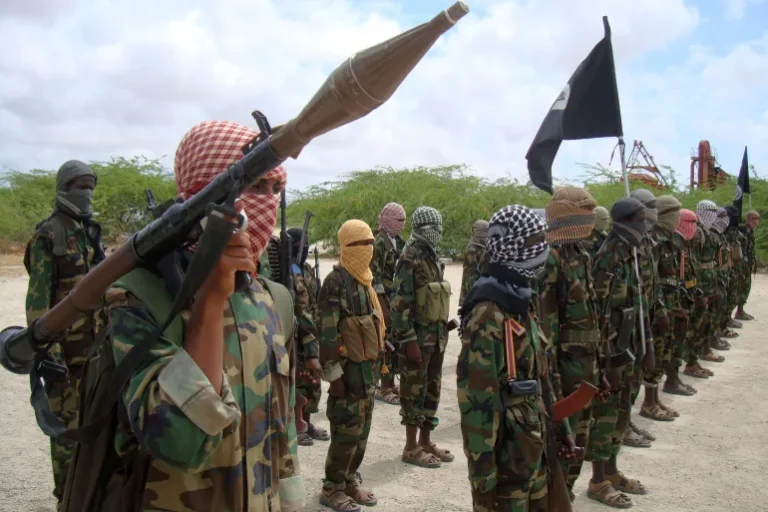
US authorities concluded that he would not face serious danger if returned to Somalia, a decision Mahad strongly disputes. He says threats from the Islamist militant group al-Shabab—angered by his online support for the Somali government—were a central part of his asylum case.
During his detention, Mahad was moved several times between facilities, including brief transfers to Arizona, where deportation flights depart. Each time, logistical delays postponed his removal—until finally, it did not.
A long road back
When deportation came, it was swift and tightly controlled. Mahad describes being placed in a restrictive restraint jacket and flown with a small group of deportees under guard. Their journey zigzagged across continents—from Central America to West Africa, then East Africa—before ending in Mogadishu.
By the time he arrived, exhaustion had dulled his emotions. “I had already accepted it,” he says.
What did move him deeply was reuniting with his three children after a decade apart. “That moment,” he says quietly, “I wouldn’t trade it for anything.”
Home, but not safe
Yet returning home has not brought peace. Mahad says he has received fresh death threats from al-Shabab since his arrival. He now lives under heavy security precautions and limits his movements, declining to share details for fear of attracting further attention.
Ironically, his online fame has also brought him a warm reception from members of his clan, including local political figures. He is aware that his prominence may open doors denied to other deportees—but it also paints a target on his back.
“If I had a choice,” he admits, “I would still be in the US.”
A wider climate of fear
Mahad’s story is unfolding against a backdrop of heightened anxiety among Somali communities in the United States. Recent political rhetoric, including statements by President Donald Trump opposing Somali immigration and questioning protections for migrants from unstable countries, has deepened uncertainty.
In Minnesota—home to the largest Somali diaspora in the US—rumours and videos of immigration raids have spread rapidly online. In neighbourhoods like “Little Mogadishu” in Minneapolis, fear has become a daily reality.
Several young Somali men told the BBC they have gone into hiding, abandoning their apartments and missing work to avoid potential arrest. Their lives, they say, have shrunk to a few rooms and dwindling food supplies.
“We don’t know what tomorrow looks like,” one of them said. “Everything feels like it could collapse at any moment.”
Starting over, again
Mahad is not alone in being sent back. While official figures are scarce, multiple Somalis have been deported in recent months. Another returnee, who asked not to be named, described spending 18 months in US detention before being flown back to Mogadishu.
He had invested his family’s savings—around $20,000—in the journey north, only to return home with nothing.
“They sent me back to zero,” he said. “There is no work here, no future.”
Like many others, he is already contemplating leaving again, despite the risks.
For Mahad, the future remains uncertain. He is back in the country he once fled, reunited with family but haunted by threats, caught between relief and fear.
“I survived the journey,” he says. “But surviving here—that’s a different battle.”
About the Author