Somaliland, Recognition Politics, and the Militarization of the Red Sea
By: Abdikarim Mataan
(With cited analytical informations drawn from Brilliance Research & Consultancy and Karima)
Introduction: Somalia’s Return from the Margins
For much of the post–Cold War era, Somalia was framed primarily through the lenses of state failure, humanitarian crisis, and counterterrorism. This framing obscured a deeper reality: Somalia was not irrelevant, but rather strategically underutilized in a global system temporarily insulated from hard geopolitical competition. That insulation has now collapsed.
As global power politics reassert themselves particularly in the Red Sea and Horn of Africa, Somalia has re-emerged as a central geopolitical hinge connecting African security, Arab maritime interests, and global trade routes. The renewed international focus on Somaliland, foreign military access, and port infrastructure cannot be understood as isolated diplomatic developments. They are components of a broader struggle over sovereignty, maritime control, and influence in a rapidly militarizing corridor.
This article builds on strategic insights articulated by Abdikarim mataan; a senior research associate on Policy and Security Studies, Brilliance Research & Consultancy presented Somalia’s place in the changing global order, and Karima’s on Somaliland’s elite-driven “recognition game.” It integrates these perspectives into a broader geopolitical assessment and projects the implications for Somalia, the Horn of Africa, and Red Sea security.
The Collapse of the Post–Cold War Assumptions
The international order that emerged after 1991 rested on several assumptions: respect for territorial integrity, restraint in the use of force, and the primacy of multilateral institutions. Today, these assumptions are increasingly subordinated to strategic necessity. Territorial revisionism is no longer taboo; sovereignty is selectively interpreted; and international law is applied unevenly.
The Horn of Africa exemplifies this shift. Once treated largely as a humanitarian concern, the region is now recognized as a frontline of strategic competition, driven by:
- The securitization of global trade routes
- Escalating Red Sea militarization
- Great-power rivalry and regional power projection
Somalia sits at the epicenter of this transformation. Its coastline, airspace, and territorial integrity directly affect access to the Bab al-Mandab Strait and the wider Red Sea basin. Consequently, any attempt to alter Somalia’s territorial configuration whether through recognition of Somaliland or external military arrangements constitutes not a local administrative matter, but a systemic geopolitical act.
Somaliland in Historical and Legal Context
Somaliland’s unilateral declaration of independence in 1991 emerged from the collapse of the Somali state rather than from a negotiated or internationally sanctioned process of self-determination. While the Somali National Movement (SNM) played a decisive role in resisting the Siad Barre regime, it was rooted primarily in a dominant clan constituency and did not represent all northern communities.
Crucially, Somaliland is neither politically nor socially homogeneous. Regions such as Awdal and Zeila, as well as areas now integrated into Somalia’s federal system, have consistently rejected secession and affirmed their place within the Somali Republic. These internal divergences undermine claims that Somaliland’s independence reflects a unified popular will.
From the standpoint of international law, Somalia retains continuous legal personality. It remains a recognized member of the United Nations, African Union, Arab League, OIC, IGAD, and the East African Community. Any external action that undermines its territorial integrity contravenes foundational principles of the UN Charter, particularly the prohibition on coercion against a state’s territorial integrity.
The “Recognition Game” and Elite Strategy
As analyzed by Karima, Somaliland’s political elites have pursued what can be described as a strategic “recognition game.” This involves a dual-track approach: seeking external diplomatic support while simultaneously deepening internal autonomy and institutional capacity.
Externally, Somaliland engages in diplomatic outreach designed to bypass Mogadishu and present itself as a functioning state. Representative offices abroad, direct engagement with neighboring states, and sustained lobbying efforts reflect an attempt to normalize Somaliland’s status in practice, even without formal recognition. Elites also frame Somaliland as an island of stability and democratic governance in contrast to southern Somalia, emphasizing elections, security forces, currency issuance, and administrative continuity.
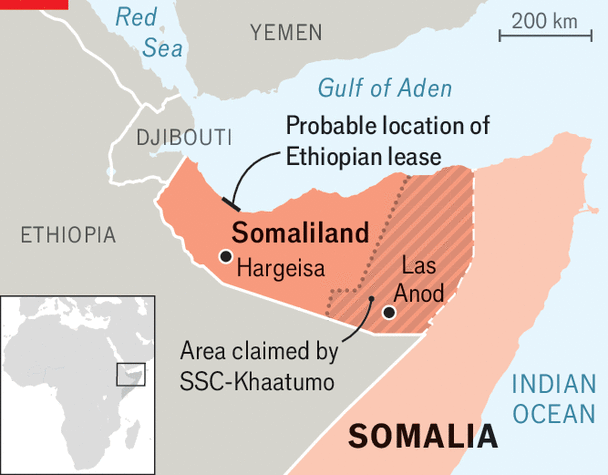
Economically and strategically, Somaliland’s elites have leveraged geography as an asset. Agreements involving the port of Berbera, including partnerships with foreign commercial actors and negotiations with Ethiopia, illustrate a pragmatic strategy of exchanging access and infrastructure for political support. These arrangements enhance Somaliland’s de facto autonomy but also entangle it in broader regional rivalries.
Internally, elites have invested in state-building, constitutional processes, and identity construction. A nationalist narrative emphasizing colonial-era distinction and historical grievance has been cultivated to legitimize claims to sovereignty. While effective in mobilizing segments of the population, this narrative often glosses over the diversity of clan perspectives and the contested nature of national identity in the region.
Recognition, Sovereignty, and the Limits of International Law
Despite these efforts, Somaliland’s path to recognition remains blocked by structural constraints. International law prioritizes territorial integrity, particularly in post-colonial contexts where border stability is seen as essential to preventing continent-wide fragmentation. The African Union’s caution reflects fears that recognizing Somaliland would establish precedents with far-reaching consequences across Africa.
The Somaliland case exposes a fundamental tension in international norms: the gap between effective governance and legal sovereignty. While Somaliland demonstrates certain functional attributes of statehood, these have not translated into de jure recognition. This gap has forced elites to pursue incremental legitimacy through practice rather than law.
Red Sea Militarization and the Risk of Proxy Conflict
The accelerating militarization of the Red Sea—driven in part by Houthi attacks on maritime traffic—has intensified external interest in forward military positioning along the Horn of Africa. Speculation regarding foreign military infrastructure in Somaliland must therefore be assessed within this broader security context.
Any foreign military presence on Somali territory without transparent, constitutionally grounded agreements would represent a direct challenge to Somalia’s sovereignty. More dangerously, it risks transforming Somali regions into proxy battlegrounds within a widening confrontation involving Israel, Iran-aligned actors, Yemen, and global naval powers.
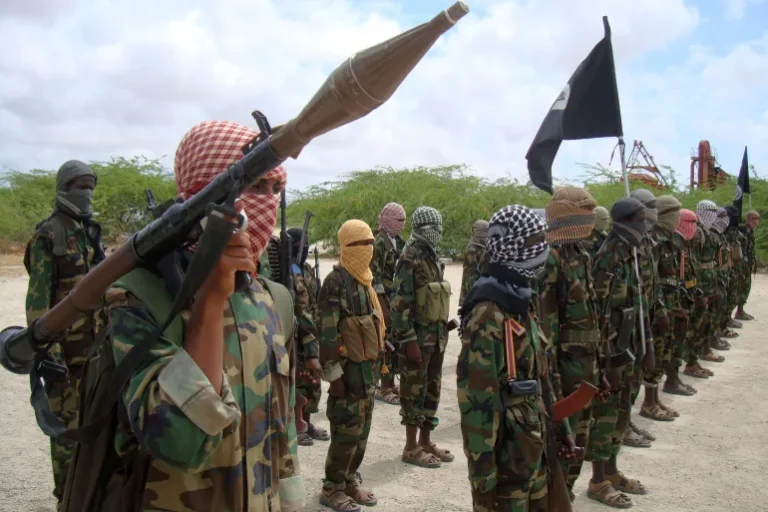
Fragmentation does not shield territories from conflict. On the contrary, it creates governance vacuums and jurisdictional ambiguity that extremist groups exploit. Historical patterns demonstrate that no Somali region is immune from radicalization or spillover violence.
Ethiopia’s Red Sea Ambitions and Regional Stability
Ethiopia’s pursuit of Red Sea access reflects long-standing structural ambitions rather than short-term economic needs. While framed as pragmatic cooperation, unilateral arrangements that bypass Somalia’s federal authority risk destabilizing the region. Altering the Red Sea balance through selective recognition or military access could provoke cascading security crises involving Somalia, Eritrea, and Egypt.
The Horn of Africa is not an empty strategic space. It is deeply interlinked with Arab maritime security, African state stability, and global trade flows. Attempts to reengineer this corridor through transactional geopolitics are more likely to generate conflict than control.
Somalia’s Strategic Imperative in a Multipolar World
As global alignments shift, Somalia faces both risks and opportunities. The emergence of alternative diplomatic groupings and renewed emphasis on sovereignty provide space for a strategy of balanced engagement. The objective is not alignment for its own sake, but leverage protecting unity, strengthening institutions, and preventing external actors from dictating territorial outcomes under security or economic pretexts.
Somalia’s unity should be understood not as an ideological aspiration, but as a collective security framework. Fragmentation would expose all regions north and south alike to external manipulation and internal instability.
Conclusion: Unity as Strategic Survival
Somalia is not a failed state; it is a contested state in a contested region at a pivotal moment in global history. Efforts to fragment it represent a broader erosion of sovereignty norms across Africa and the Arab world. Supporting Somalia’s territorial integrity and institutional capacity is not an act of sentiment it is a rational investment in regional stability and Red Sea security.
As the analyses of the different group revealed together, the future of Somaliland and Somalia cannot be separated from the dynamics of global power transition. States that manage balance wisely endure periods of systemic change. Those that fragment become arenas for others’ wars.
The challenge before Somalia is clear: to leverage the changing world order, rather than be broken by it.
About the Author