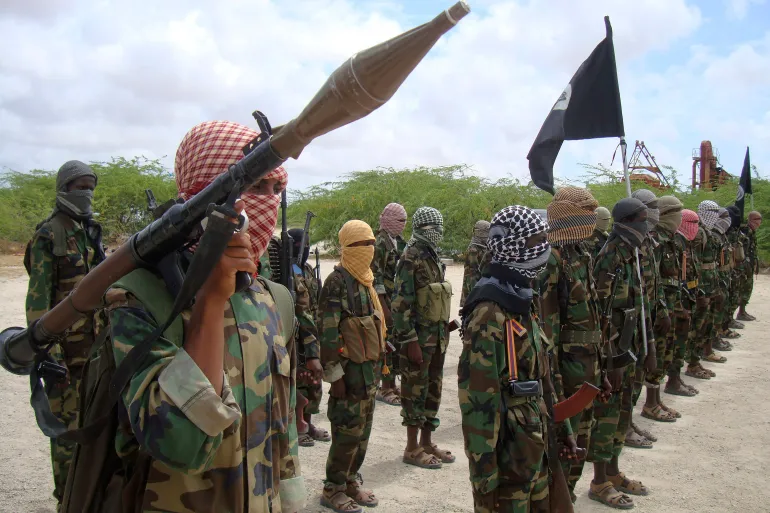
Al-Shabaab fighters have taken control of the town of Nuur Dugle in Somalia’s Middle Shabelle region, blocking an important supply road that connects Mogadishu to parts of central Somalia. The loss of the town is a major blow to the Somali army and federal government and shows how fragile recent security gains remain.
Local residents say the town fell after several hours of intense fighting between Al-Shabaab militants and Somali government forces, who were supported by allied clan militias. In the end, government troops pulled back and left their bases behind, allowing the militants to move in and take control.
The takeover did not come as a complete surprise. For days, there had been warnings that Al-Shabaab was moving through nearby villages. Despite these alerts, the advance was not stopped, raising concerns about preparedness and coordination on the ground.
Nuur Dugle is strategically important. Government forces had held the town since November 2022, when Somali troops, local militias, and international partners launched a major offensive to drive Al-Shabaab out of large areas of the country. With Nuur Dugle now in militant hands, Al-Shabaab can cut off supply routes to Masagawa and Eldher in the Galgadud region—two of the few towns in central Somalia that are still under government control after that offensive.
After the town was captured, there were reports of airstrikes carried out by Somalia’s international allies in and around Nuur Dugle. However, there has been no official confirmation about what was targeted or how effective the strikes were. The Somali federal government has also not yet released a public statement explaining the loss of the town or outlining its next steps.
The fall of Nuur Dugle highlights Al-Shabaab’s ability to recover and strike back, even after sustained military pressure. Earlier this year, the group managed to retake large areas in southern and central Somalia before losing momentum. This latest move suggests the militants are once again trying to regain ground and disrupt key supply lines used by government forces.
As fighting continues in several regions, the situation underlines the wider challenges facing Somalia’s efforts to stabilize the country. Holding territory, protecting supply routes, and maintaining strong cooperation between the army, local militias, and international partners remain crucial in the fight against an insurgency that continues to adapt and exploit weaknesses.
About the Author