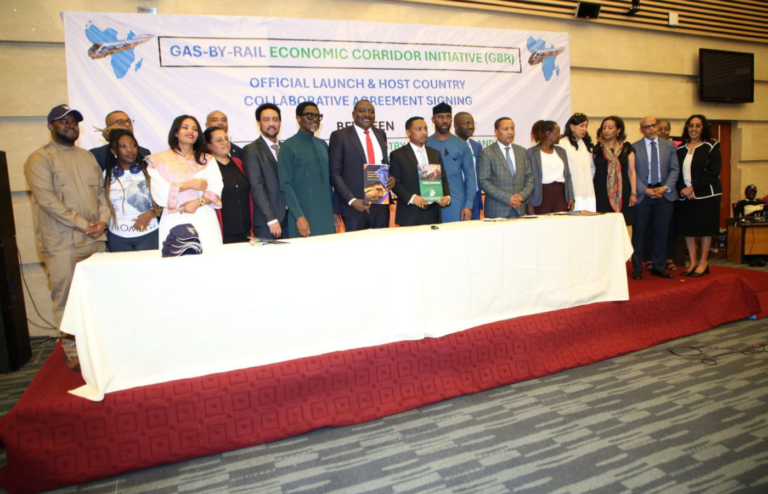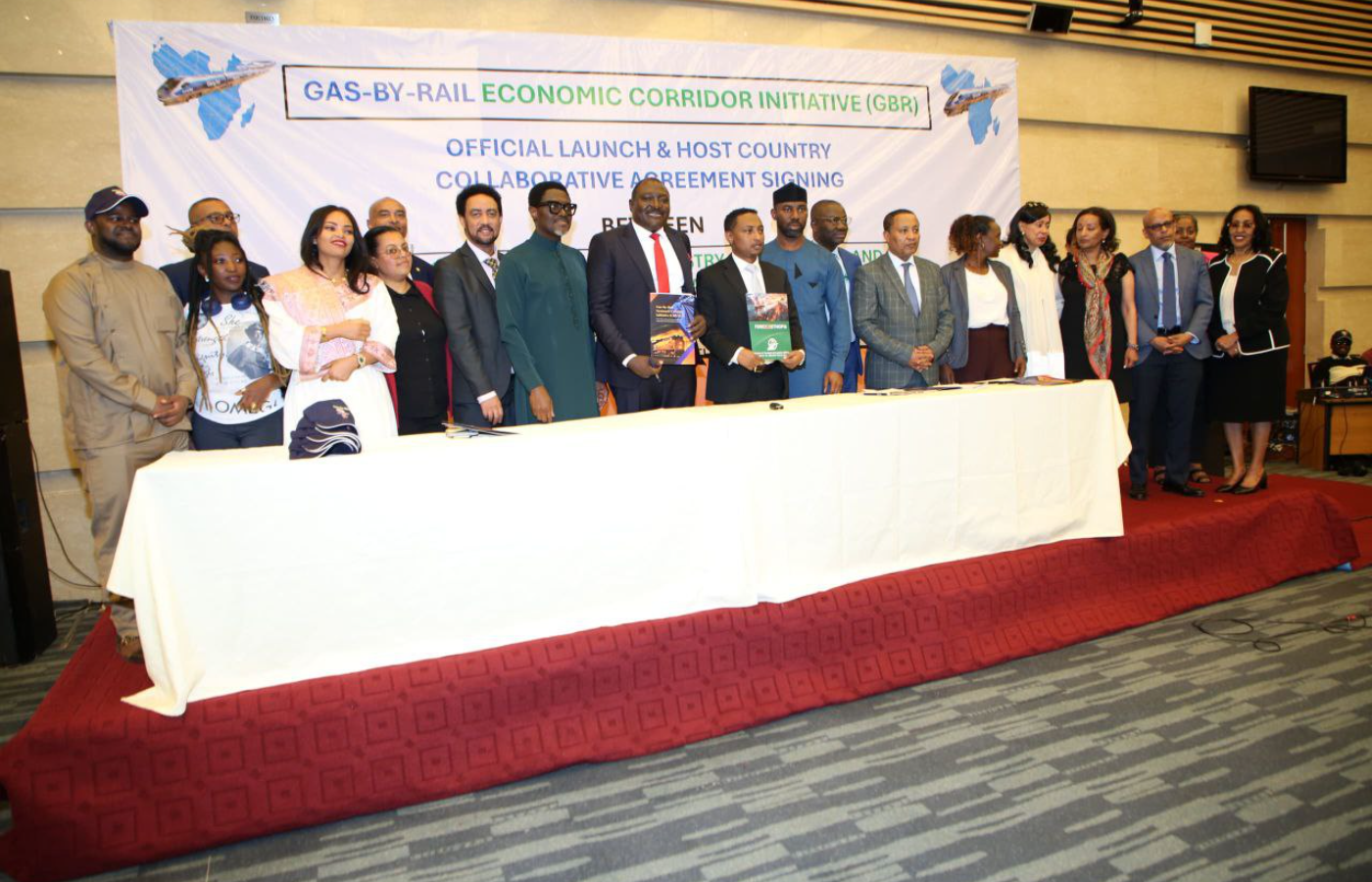
Ethiopia and Nigeria have launched a groundbreaking partnership called the Gas-by-Rail Economic Corridor, aimed at building one of Africa’s largest freight railway networks. The project envisions a railway stretching approximately 73,500 kilometres, connecting around 40 Sub-Saharan African countries, with Ethiopia serving as the central hub.
The initiative is led by Nigeria’s Insight Dynamic Resources in collaboration with Ethiopia’s Ministry of Transport and Logistics. It is primarily a private-sector project, supported by global technology and industrial partners. The corridor will operate alongside a continental energy system powered by as many as 470 high-efficiency gas turbines, producing an estimated 270 gigawatts of electricity. A virtual hydrogen pipeline capable of transporting 100 million tonnes of fuel annually is planned to supply the turbines, providing a clean-energy alternative across the continent.
The scale of the operation is enormous. Developers estimate it will require more than 5,100 heavy-haul locomotives, around 80,000 specialised tank units, and nearly 100,000 freight wagons. To manage this complex system, the project will employ a digital backbone provided by Siemens Mobility, using artificial intelligence and digital-twin modelling to monitor infrastructure, optimise network capacity, and coordinate operations in real time. The system is designed to support billions of users under a unified smart-rail framework.
The estimated cost of the programme ranges from $500 billion to $1 trillion, depending on implementation phases. Ethiopia currently has about 5,000 kilometres of designed railway routes, but only 902 kilometres are operational. Expanding the network through private investment is essential to connect with regional ports and support the African Continental Free Trade Area’s goals. The project could also reduce pressure on forests by limiting reliance on woodfuel.
The Gas-by-Rail initiative is built around three key components. First, an industrial programme with a green-steel complex will enable domestic production of rail tracks. Second, a digital network will integrate blockchain-based freight systems, creating a continent-wide smart-rail network. Third, a decarbonisation plan with battery-electric locomotives will strengthen clean-energy logistics and reduce emissions.
If completed at full scale, the Gas-by-Rail Corridor could become one of Africa’s most ambitious infrastructure projects, linking East, West, and Central Africa through a shared freight and energy network, creating millions of jobs, and boosting economic growth across the continent.
About the Author